Blackjack math
Blackjack Push 22: The Dealer-22 Rule That Funds Every Gimmick
Free doubles, switched cards, zapped hands: every one of those gifts is paid for by the same fine print. When the dealer busts with exactly 22, your winning hand does not win. Here is what that quiet tie costs.
Published Wednesday, June 10, 2026 · 9 min read
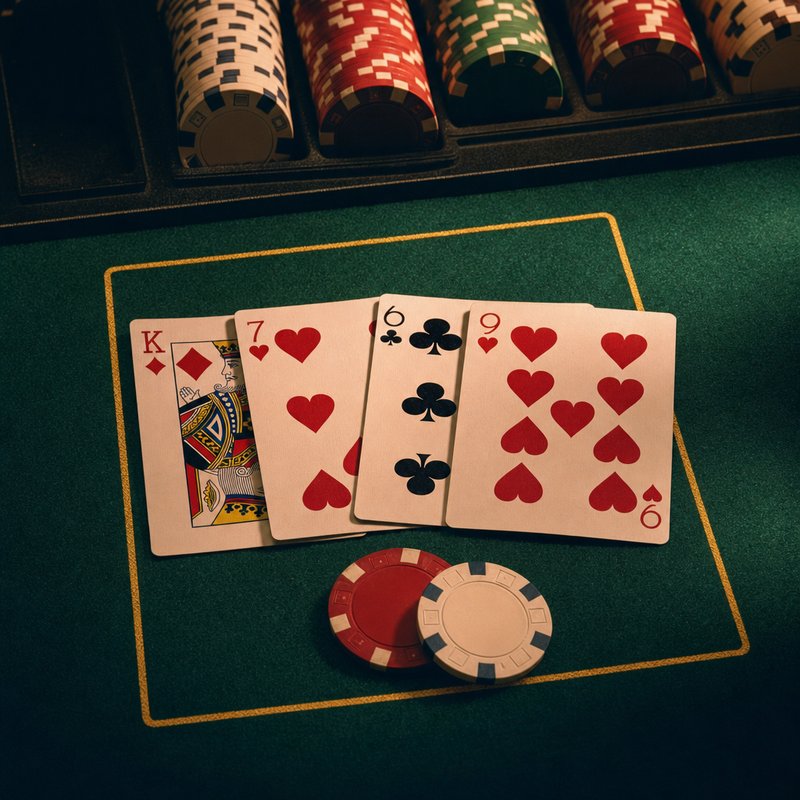
The blackjack push 22 rule takes one sentence to state and a whole article to price: when the dealer busts with exactly 22, your winning hand does not win, it ties. Every chip you had in the fight comes back to you, and none arrive with it. The dealer sweeps nothing, pays nothing, and the shoe moves on while the table works out what just happened.
What just happened is the bill arriving.
How the blackjack push 22 rule works
The mechanics are narrow and precise. The dealer plays out their hand as usual; if it lands on exactly 22, every live player hand pushes rather than winning. Hands that already busted stay busted. A player blackjack is paid first and is immune. Dealer totals of 23, 24, 25 or 26 remain full busts and pay the table normally.
So the rule converts one specific dealer outcome, and only that outcome, from a loss into a tie. That sounds like a rounding error. It is closer to a mortgage payment, because the outcome it targets is the single most common way for a dealer to bust, and because the rounds it voids are rounds you were overwhelmingly likely to win, given that the dealer had just gone over.
Picture the round that teaches it. You draw an 11 against a dealer 6, double for the table maximum, and pull a ten for 21. The dealer flips a 10 for 16, draws a 6, and lands on 22. In any classic game that sequence pays you double. Here the dealer taps the layout, your doubled stack comes back untouched, and the pit calls it a push with a straight face. You lost nothing. You also got nothing for the best-played hand you will make all night.
You will never see blackjack push 22 grafted onto a standard game as a naked rule change. It always arrives bundled with a gift, and the gift is the point.
The games built on dealer 22
Three tables carry the rule on American floors, and all three come from the same designer: Geoff Hall, who sold his catalog to Scientific Games, today’s Light & Wonder. The pattern is identical each time. Hand the player something no classic game would dare offer, then take it back one 22 at a time.
| Game | The gift the 22 pays for | House edge (optimal play, per Wizard of Odds) |
|---|---|---|
| Blackjack Switch | Trade the second cards between your two hands | ≈ 0.58% |
| Free Bet Blackjack | Free doubles on hard 9–11, free splits on most pairs | ≈ 1.04% |
| Zappit Blackjack | Swap out a hard 15–17 for two fresh cards | ≈ 1.15% |
Switch came first, in the early 2000s, built around the most radical player option ever printed on a felt: you play two hands and may trade their second cards, turning a 10-6 and a 5-10 into a clean 20 and an 11 ready to double. Free Bet reached Las Vegas floors in 2012 and became the family’s breakout hit. Zappit is the youngest, analyzed by Wizard of Odds in its Bovada online version and its trade-show ruleset, and it lets you discard the three worst totals in blackjack on demand.
Switching a pair of dead hands into a monster, or having the casino pay for your doubles, is worth several percent to the player. No casino donates several percent. Push 22 is the counterweight that lets the marketing department promise magic while the math department keeps the lights on, and it is elegant precisely because it hides in the one moment players read as a win already banked.
Notice the edges in that table, though. Two of the three games are cheaper than the 6:5 classic blackjack that now covers half the pits in America. The rule is not a scam; it is a visible price for a visible gift. It only becomes expensive when you play a push 22 game with a classic-game strategy, or when you never price the pushes at all.
How often exactly 22 lands
Wizard of Odds puts the probability that the dealer draws to exactly 22 at 7.35% on a six-deck game where the dealer hits soft 17. One round in thirteen or fourteen. For calibration, the dealer busts about 28% of the time overall, so roughly one bust in four lands on exactly 22, making it the most common single bust total in the game.
The reason is mechanical. The most frequent bust is a ten-value card falling on a dealer stiff of 12, and 12 plus 10 is 22. The full anatomy of how dealer hands die, upcard by upcard, lives on our dealer bust odds page, and the 22 spike is the first thing you notice on the chart. The rule’s designers did not pick 22 for superstition. They picked the bust total the shoe produces most often, which is exactly where a refund clause earns the most.
Frequency is the whole trick. A rule that fired once a night would buy nothing.
What the push is worth to the house
Here is the back-of-envelope version, and it is honest enough for a felt-side decision. The 22 arrives on about 7.35% of rounds. When it does, your hand is live in most of them, and a live hand against a busted dealer is a paid win in any classic game. Converting those payouts into ties costs you something like five to six cents per dollar wagered, before the game’s gimmick starts handing value back.
That figure explains everything about these tables. Free Bet Blackjack can afford to bankroll your doubles and splits because the pushes finance the program. Switch can afford to let you rebuild two hands into good ones. Zappit can afford to let you throw away the worst totals in blackjack. Each gift is worth a few percent; the 22 collects a few percent; the difference, a fraction of a percent either way, is the house edge you actually pay. The house edge guide ranks where each of these lands against the classic game.
The strategic consequence is worth one paragraph of your attention. Standing on a stiff is a bet on the dealer busting, and blackjack push 22 quietly refunds a quarter of those busts. So standing is worth less here, and every variant’s published chart flips a handful of 12-to-14 totals against a dealer 2, 3 or 4 from stand to hit; taking one more card to improve your total buys back some of the value the pushed busts took away. Learn those cells before you sit down. Playing classic basic strategy at a push 22 table is paying for the gift and then declining to open it.
There is also a small psychological tax the math tables never print. A push feels like nothing happened, so players do not log the 22s as losses the way they log a dealer 20 beating their 19. Over a session the rule collects its nickel per dollar without ever producing a single memory of being beaten, which may be the most commercially brilliant thing about it.
Betting on the 22 itself
Casinos being casinos, the fine print eventually got its own betting circle. Blackjack Switch layouts commonly offer a Push 22 side bet: 11 to 1 on the dealer drawing to exactly 22, which Wizard of Odds prices at a house edge of about 11.8%. Nevada’s gaming regulators have also approved a Free Bet Blackjack variant carrying a Push 22 progressive, where the jackpot side of the felt cashes on suited or colored 22s.
The psychology is shrewd. The side bet pays on precisely the round that voids your main hand, so it sells itself as a hedge: lose the push, win the wager. But an 11.8% edge is not a hedge, it is a second, worse bet stapled to the first, and hedging a 5-cent leak with a 12-cent leak is arithmetic nobody should perform with real chips. Skip it. If you want the full menu of props graded side by side, the side-bet board covers this one’s cousins in detail.
One habit worth building at any of these tables: watch what the dealer does after drawing 22. No sweep, no payout, just a flat tap and the cards go away. Count how many times that tap lands in an hour. That number, times your average bet, times most of a dollar-per-dollar win you would have collected in a classic game, is the gimmick’s price tag, paid in installments small enough that most of the table never adds them up.