Blackjack math
Blackjack House Edge: What Every Rule and Side Bet Really Costs
The classic game costs about half a percent when you play it well. Every rule printed on the felt moves that number, and every side bet multiplies it. Here is the full price list, line by line.
Published Tuesday, June 16, 2026 · 11 min read
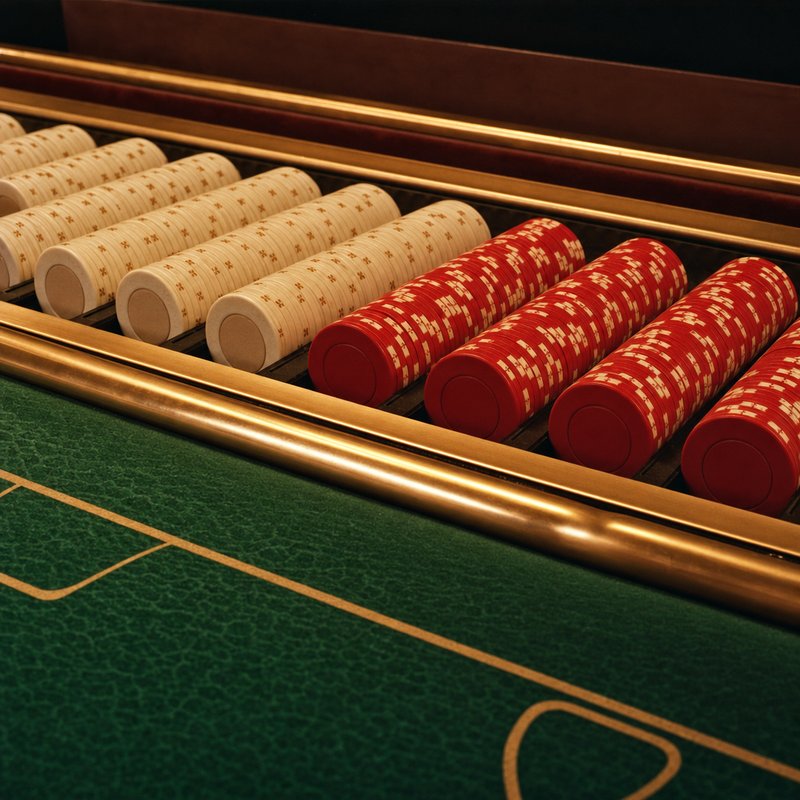
Blackjack house edge is the number the whole casino floor is organized around, and almost nobody at the table can quote it. It is the percentage of every wager the house keeps on average, and in blackjack it is astonishingly small: about half a percent when the rules are decent and you play well. That number is not a constant, though. It is an equation, and every line of print on the felt is a term in it.
This page is the price list.
What blackjack house edge actually measures
The definition is strict: the house edge is the fraction of each initial bet the casino expects to keep, averaged over the long run. A 0.5% edge means that across millions of hands, fifty cents of every hundred dollars wagered stays with the house. Not per session, not per shoe. Over a weekend you can run anywhere; over a career, the average grinds toward the posted number with mechanical indifference.
Translate it into an hourly rate and it stops being abstract. A $15 bettor seeing 60 hands an hour puts $900 through the machine; at 0.5% the expected cost is about $4.50 an hour, cheaper than the parking. The same bettor at a 2% table pays $18 an hour for the identical experience. Same cards, same chair, quadruple the rent.
Pace multiplies everything, and pace is the variable nobody prices. Heads-up against a fast dealer you might see 200 hands an hour; at a full table, closer to 50. The percentage never moves, but your exposure quadruples, so the empty high-limit table is, per hour, a far more expensive room than the crowded $10 game with identical rules. Continuous shuffling machines work the same lever: the rule math barely changes, but removing the shuffle break adds hands, and every added hand is another unit of wager fed through the same percentage.
Blackjack earns its reputation because that 0.5% is the lowest widely available figure in the building, and it has been understood since the 1950s, when the Baldwin group’s arithmetic and later Edward Thorp’s Beat the Dealer showed the game was nearly fair under good rules. The catch: the figure assumes flawless basic strategy. Play by feel and your personal edge drifts toward 2% regardless of what the felt promises.
The rule-by-rule price list
Every deviation from the baseline game moves the blackjack house edge by a published, simulated amount. The figures below are from Wizard of Odds’ rule-variation tables, stated as the cost or credit to you against an eight-deck baseline.
| Rule on the felt | Effect on your return |
|---|---|
| Blackjack pays 6:5 | −1.39% |
| Blackjack pays 1:1 (party pits, some promos) | −2.27% |
| Dealer hits soft 17 | −0.22% |
| No doubling after splits | −0.14% |
| Double on 10 and 11 only | −0.18% |
| Player may not resplit aces (vs. resplitting allowed) | −0.08% |
| Single deck instead of eight | +0.48% |
| Double deck instead of eight | +0.19% |
| Player may draw to split aces | +0.19% |
| Late surrender against ten | +0.07% |
| Blackjack pays 2:1 (rare promotion) | +2.27% |
Read the top line twice, because it is the whole modern story. The shift from 3:2 to 6:5 blackjack costs 1.39 percentage points, which nearly quadruples a good game all by itself. Every other line on the table is a rounding error next to it. A 6:5 single-deck game, marketed as a player-friendly throwback, nets out worse than an eight-deck shoe with honest payouts: the deck credit of 0.48% never survives the payout debit of 1.39%.
The practical skill is stacking. Find 3:2, dealer stands on soft 17, doubles after splits, resplit aces, and you are playing near 0.4%. Each missing item adds its line to your bill. None of it is hidden, exactly. It is printed on the felt in the one language casinos trust players not to read: percentages that never appear.
Side bets: 2.7% to 25% on the same square foot
Now the reason this site exists. Every number above concerns the main wager. The side bets sharing the felt obey no such discipline, and their edges run from about 2.7% at the merciful end past 25% at the other. The friendliest side bet on the board costs five times the game it is bolted to; the worst cost fifty.
The pattern is consistent across the full side-bet board: a 21+3 wager runs in the low single digits on common pay tables, insurance takes about 7.4%, and Lucky Ladies climbs into the twenties. The mechanism is always the same trade: a big, memorable top payout financing a quiet, permanent leak on every hand you play it.
Two properties of side-bet pricing deserve flagging. First, the same bet varies by address: most side bets ship with several approved pay tables, and the difference between the best and worst posted schedule for one wager can run two or three full percentage points, so the placard matters as much as the bet’s name. Second, the edges never appear anywhere a player will see them. The main game’s cost hides in rules you can at least read; the side bets’ cost hides in pay-table arithmetic almost nobody performs at the table.
None of this makes side bets unplayable. It makes them purchasable entertainment, and this table tells you the ticket price.
House edge versus RTP
You will meet the same number wearing two costumes. Table-game analysis speaks in house edge; slot machines and online lobbies speak in RTP, return to player. They are complements: RTP equals 100% minus the house edge. A 0.5% blackjack game is a 99.5% RTP game. A 96% RTP slot is a 4% edge machine, eight times the price of good blackjack.
The costume matters because of how each is sold. “96% return” reads like generosity; “4% of every spin, forever” reads like the invoice it is. When an online table advertises RTP, subtract from 100 and you are back in blackjack house edge terms, the currency this article runs on. One more translation worth knowing: house edge applies to each bet you place, not the money you brought. A $200 buy-in cycled twenty times through a 1% game has $4,000 of exposure and an expected cost near $40, which is how modest edges eat entire bankrolls given enough hours.
Why a terrible bet can still pay your night
Here is the objection every side-bet player raises: my friend hit Lucky Ladies for 1,000:1 last month, so how bad can 25% be? Both halves are true, and they measure different things. Edge is the average of all outcomes; variance is the spread around that average. A high-edge, high-variance bet loses steadily and pays spectacularly, and casinos design them that way on purpose, because the jackpot is what gets remembered and the leak is what gets banked.
Blackjack’s main game sits at the opposite corner: tiny edge, modest swings, a standard deviation of a bit over one bet per hand. That is why the per-hand odds show more losing hands than winning ones, yet the money only trickles away rather than pours. Short sessions are ruled by variance. Long careers are ruled by edge. The casino plays the long career on every table simultaneously, which is why it can afford to smile about your friend’s jackpot.
Anyone promising a system that beats a negative-edge game with bet sizing is selling variance dressed as skill. Skip it.
Where the numbers live, and why they are not on the felt
Casinos publish rules, never costs. The felt announces “Blackjack pays 6 to 5” in cheerful gold script; no felt has ever added “which raises the house edge by 1.39 percentage points.” The translation layer lives elsewhere: in analyst tables like Wizard of Odds, in the rule sheets game distributors file with regulators such as the Nevada Gaming Control Board, and in pages like this one. Regulated online casinos sometimes disclose RTP in a help file, one hundred minus the number this page runs on.
So the last skill is reading a table before joining it, in the right order. Payout line first, always: 3:2 or walk is a defensible life rule. Soft-17 line second. Doubling and resplit rules third. Deck count last, and only after the payout line has passed inspection. Thirty seconds of reading the felt is worth more per dollar than every betting system ever sold, and the casino will let you do it for free while the shuffle finishes.