Side-bet file
Hot 3 Blackjack Side Bet — Payouts, RTP and the Real House Edge
Evolution's live-dealer wager on three cards: your first two plus the dealer's upcard. Totals of 19 to 21 pay, three sevens pay 100:1, and the published 94.60% RTP tells you exactly what the ride costs.
Published Friday, July 3, 2026 · 8 min read
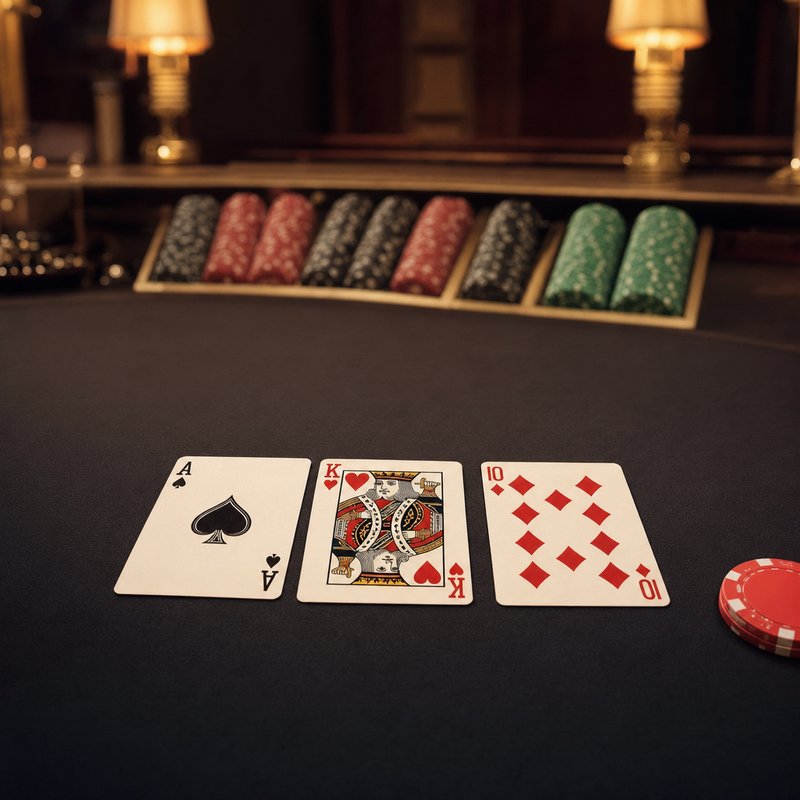
Hot 3 payouts: the Evolution pay table
| Outcome | Pays | Notes |
|---|---|---|
| 7-7-7 | 100:1 | suits do not matter on this rung |
| Suited total of 21 | 20:1 | |
| Unsuited total of 21 | 4:1 | |
| Total of 20 | 2:1 | |
| Total of 19 | 1:1 | |
| 18 or less, 22 or more | Loss |
Evolution built its live-casino empire on games that deal one hand to unlimited players, and Infinite Blackjack is the flagship: one common hand, every seat playing it their own way. Hot 3 blackjack is the side bet Evolution attached to that format, a wager on your first two cards plus the dealer’s upcard producing a total of 19, 20 or 21. It settles seconds into the hand, pays up to 100:1 for three sevens, and carries a published return of 94.60%.
That published number is the most useful thing about it. Land-based side bets make you hunt for the math; Evolution prints the RTP in the game’s help file, and Wizard of Odds’ independent analysis of the eight-deck schedule lands on the same 5.40% house edge. No mystery, no fine print. You know the price before the first chip moves.
How the hot 3 blackjack side bet works
Before the deal you click the Hot 3 spot next to your main bet. Once your two cards and the dealer’s upcard are dealt, the software adds the three values, with aces counting one or eleven exactly as in the main game, and pays the best rung you match.
A total of 19 returns even money. A 20 pays 2:1, an unsuited 21 pays 4:1, and a 21 in matching suits jumps to 20:1. The crown is 7-7-7 at 100:1, and unlike most premium rungs on the board, suits are irrelevant there; any three sevens collect.
Then the bet is done. The dealer’s hole card, your hits, the eventual outcome of the hand: none of it touches Hot 3. You can lose the main wager and collect 20:1 on the side in the same sixty seconds.
One consequence of the Infinite Blackjack format is worth spelling out. Because every player at the table shares the same two starting cards, when the hand comes 7-7 with a seven up, everyone who clicked the spot wins 100:1 simultaneously. Studio jackpot moments are communal by design.
The price: 94.60% RTP, verified
Evolution’s published figure and the independent math agree, which is rarer than it should be in this category. Wizard of Odds analyzes the schedule at three shoe sizes: 5.65% house edge at four decks, 5.49% at six, and 5.40% at the eight decks Evolution actually deals. The house keeps a nickel and change of every dollar wagered.
The frequency profile, from the same analysis, explains how it feels to play. Around 24% of hands win something. The three plain totals do the work, each arriving between 7% and 8.4% of the time, while the suited 21 lands about once per 184 hands and the sevens jackpot once per 2,600 or so. Three hands in four, the bet simply loses.
That win rate is the bet’s real product. A quarter-of-the-time payout keeps the wager lively at low stakes without the long droughts that make jackpot-style bets corrosive, and the 100:1 rung is reachable enough that regulars genuinely see it.
For calibration against the rest of the side-bet board: 5.40% beats Perfect Pairs on most schedules and everything in the pays-on-20 family by a mile, but loses to the main game by a factor of ten. A $5 Hot 3 every hand costs about 27 cents a round in expectation. Cheap drama, honestly priced, still drama.
What a hundred hands of it looks like
Run the verified frequencies over a block of a hundred hands with $1 riding on each, and the session takes shape. Around 24 hands pay: seven-ish at even money, seven or eight at 2:1, eight at 4:1, and a suited 21 somewhere in every second block. Expected cost for the hundred: about $5.40, the edge doing its quiet work underneath a surface that feels close to break-even.
That near-break-even texture is worth understanding, because it is the trap and the charm at once. The 1:1 and 2:1 rungs recycle your stake constantly, so a Hot 3 bankroll erodes in a slow drip rather than the cliff-drops of jackpot bets, and a modest heater, say three 4:1 hits in ten hands, puts you genuinely ahead. Variance this low is rare in the side-bet aisle.
The studio format adds its own tempo consideration. Infinite Blackjack deals on a fixed betting timer, around the clock, with no shuffle breaks, no colored-up chips, and no walk to the cage interrupting the rhythm. Playing three hundred hands in an evening is easy in a way it never is on a floor, and the per-hand toll scales with exactly that ease. The bet stays cheap; the volume rarely does.
One session habit fixes most of it: decide the number of hands in advance, not the dollar amount.
Hot 3 vs Lucky Lucky: the haircut explained
Hot 3 is a translation of Lucky Lucky, the original two-cards-plus-upcard bet, and the differences are exactly where a studio product trims a floor product. Lucky Lucky’s full schedule pays 2:1 on 19 and carries dedicated 6-7-8 rungs up to 100:1 suited; Hot 3 pays 19 at even money and drops the 6-7-8 family entirely, keeping only the sevens crown. Result: 2.66% becomes 5.40%, roughly double the price for the same underlying event.
In exchange you get availability. Lucky Lucky’s best felt has to be found; Hot 3’s schedule is identical on every Evolution table in every regulated market, around the clock. Uniformity is worth something, just not two percentage points of edge to anyone doing the arithmetic.
The trim pattern itself is a small education in how studio side bets get priced. Evolution kept the rungs that produce frequent wins, since frequent wins keep the spot clicked, and cut the rungs that cost real return, the 2:1 on 19 and the mid-frequency 6-7-8 pays. The player-facing texture barely changes; the price roughly doubles. Once you see that trade in this bet, you will recognize it across half the live-casino menu.
There is no version shopping to do here, and that cuts both ways. Nobody can deal you a gutted Hot 3 pay table, and nobody can offer you a generous one.
Pairing it with 21+3 and the other Evolution spots
Infinite Blackjack lines up four side bets on one hand: Hot 3, 21+3, Any Pair and Bust It. They read different slices of the same deal. 21+3 makes a poker hand from the identical three cards Hot 3 totals, Any Pair reads only your two cards, and Bust It waits for the dealer to break.
Players routinely load two or three spots at once, and the arithmetic of that habit deserves one honest sentence: every added spot is an independent wager with its own edge, so stacking Hot 3 with 21+3 does not hedge anything, it doubles your expected loss on the side action. The same three cards can win both, lose both, or split, and the house’s cut applies to each spot separately.
If you want exactly one, the choice is a price-versus-texture question. Hot 3 wins more often; 21+3’s common version costs a bit less on some schedules and pays its top rung for suited trips. Our blackjack odds page carries the underlying three-card probabilities if you want to see the machinery.
The main game on these tables deserves a footnote too: Infinite Blackjack plays under standard multi-deck rules, and Evolution’s related Free Bet Blackjack tables carry their own side-bet menu with different math. Same studio, different products, always worth reading the specific help file.
Playing Hot 3 without kidding yourself
Size it small and think of it as renting variance. At 5.40%, a dollar or two per hand buys frequent little wins and an occasional 20:1 spike for less than the cost of most floor side bets, and the published RTP means nobody is hiding the toll. As hot 3 blackjack habits go, that one is defensible.
It is not a strategy. No decision you make affects it, no progression beats it, and a seven-rich shoe cannot be exploited in an infinite-deck-shuffle studio environment the way a live Lucky Lucky shoe theoretically can. The 5.40% is a constant, hand after hand.
The practical checklist is short. Confirm the main wager first, since the side spot is unavailable without it. Keep the Hot 3 stake at a fraction of your main bet. And when 7-7 lands with a seven showing, enjoy the moment properly; at once per 2,600 hands, you earned it by attendance.