Side-bet file
The 21+3 Blackjack Side Bet — Payouts, Odds and the Real House Edge
Your first two cards plus the dealer's upcard, graded like Three Card Poker. Here is every posted pay table, the verified math behind each one, and why this is the least punishing wager on the side-bet board.
Published Friday, May 15, 2026 · 12 min read
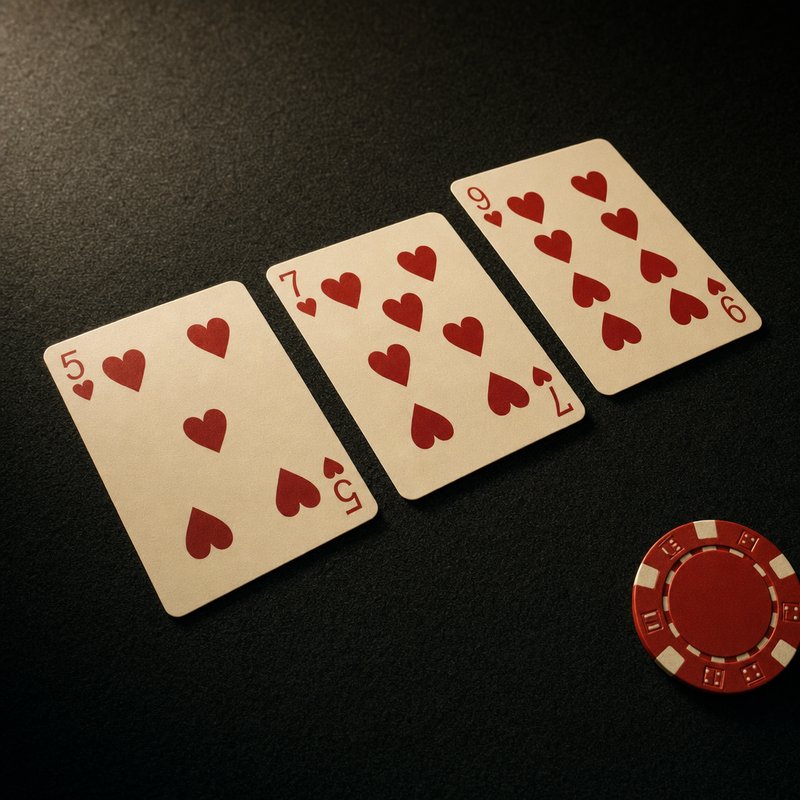
21+3 blackjack payouts: the tiered pay table
| Outcome | Pays | Notes |
|---|---|---|
| Suited three of a kind | 100:1 | three identical cards, e.g. three queens of spades |
| Straight flush | 40:1 | |
| Three of a kind | 30:1 | mixed suits |
| Straight | 10:1 | ace plays high or low |
| Flush | 5:1 | the workhorse rung where most wins land |
| Anything else | Loss |
The most played side bet in blackjack is not really a blackjack bet at all. The 21+3 blackjack side bet takes your first two cards, borrows the dealer’s upcard, and grades the three of them as a poker hand: flush, straight, three of a kind, straight flush, suited trips. Your hits, stands and doubles are irrelevant to it. The deal decides everything, and it decides fast.
That poker crossover is exactly why the bet conquered the pit. Wizard of Odds traces it to the Las Vegas Hilton in April 2001, and a quarter century later it sits on more felts than any competing wager: US floors, London casinos, and virtually every live-dealer blackjack stream in the regulated online world. In the UK it has become so standard that many tables treat it as part of the base layout rather than an add-on.
It also happens to be the cheapest ticket in the category. That combination deserves a closer look.
How the 21+3 blackjack side bet works
Before the deal, you put chips on the 21+3 spot next to your main bet. The dealer pitches your two cards and exposes an upcard, and at that instant the side bet is already settled: those three cards either form a qualifying three-card poker hand or they don’t. No hole card, no draws, no decisions. Players who bust the main hand still collect if the three-card hand connected.
The settlement order matters more than new players expect. Because the wager grades before the dealer peeks for blackjack, it pays out even on hands where the main bet is about to be swept by a dealer ace-ten. Plenty of players have lost the hand and left the round ahead, purely because a suited upcard completed their flush.
The bet belongs to the Three Card Poker stable. It’s marketed by Galaxy Gaming, which acquired the Prime Table Games portfolio that produced both games, and the hand rankings carry straight over. One quirk matters: in three-card poker rankings a straight outranks a flush, because flushes are easier to make with three cards. The tiered 21+3 blackjack payouts respect that, paying straights double what flushes get.
Everything else is procedure. The dealer grades the three cards, pays or sweeps, and the blackjack hand carries on as if nothing happened.
21+3 blackjack payouts: flat 9:1 versus the tiered ladder
Two families of pay table circulate, and the difference matters more than most players realize.
The original version pays a flat 9:1 on any qualifying hand, so a humble flush earns exactly what a suited three of a kind earns. It reads stingy and plays generous: Wizard of Odds puts its house edge at 3.24% over six decks, the best widely available number in the category. The tiered family, now the more common sight, spreads the money up the ladder instead. Here are the major versions and what they cost, per the same source:
| Version | Flush | Straight | Trips | Str. flush | Suited trips | House edge |
|---|---|---|---|---|---|---|
| Classic flat (6 decks) | 9:1 | 9:1 | 9:1 | 9:1 | 9:1 | 3.24% |
| Standard tiered (6 decks) | 5:1 | 10:1 | 30:1 | 40:1 | 100:1 | 3.70% |
| Evolution live (8 decks) | 5:1 | 10:1 | 25:1 | 40:1 | 100:1 | 6.29% |
| “Xtreme” (6 decks) | 5:1 | 10:1 | 20:1 | 30:1 | — | 13.39% |
| Progressive (6 decks) | 3:1 | 7:1 | 20:1 | 25:1 | 125:1 + jackpot | 33.44% before jackpot |
Read that bottom half carefully. The Xtreme and progressive versions wear the same 21+3 badge while charging four to ten times the standard price. The progressive’s 33.44% figure assumes a zero jackpot, and per the Wizard’s math the meter needs to pass roughly $27,000 before the bet even theoretically breaks even. Same name on the felt. Wildly different product.
The practical rule: find the trips number. 30:1 on three of a kind marks the good tiered table; 20:1 marks a version to walk past. That one glance separates a 3.7% bet from a 13.39% one, which is the single highest-value piece of felt-reading in this corner of the pit.
21+3 blackjack odds: what actually hits
The 21+3 blackjack odds of collecting anything at all run to roughly one hand in seven, and the distribution inside that number is lopsided. Flushes do almost all of the winning. Three cards sharing a suit is by far the most common qualifying event, which is why the tiered schedule prices them at a mere 5:1. Straights land a distant second.
Then the air gets thin. Three of a kind needs three of the same rank across your two cards and the upcard. A straight flush needs sequence and suit at once. And the suited three of a kind atop the ladder needs three physically identical cards, three sevens of clubs, say — an event so rare that 100:1 still leaves the house comfortable. You can play the bet weekly for years without seeing one.
This shape is standard side-bet architecture: frequent small wins to keep chips moving, a billboard number to keep hope alive. What separates 21+3 from its neighbors is the total price. Compare the tiered version’s 3.70% with the 17%-plus that Lucky Ladies extracts, or the 4–8% band where Perfect Pairs usually lands, and this bet starts to look almost respectable.
Almost. A $5 chip on 21+3 every hand at 3.70% still costs about 18 cents a round in expectation, call it $11 an hour at a brisk table. The main game played well costs a fifth of that. Nothing on the side-bet strip is free; this is just the smallest cover charge, and you should know the size of it before you pay.
House edge by deck count
Deck count moves this bet more than most players suspect, and it moves it in the opposite direction from the main game. More decks mean more duplicate cards, which means more flushes and far more suited trips. So the flat 9:1 version, which Wizard of Odds tracks from 2.74% up to 13.30% across one to eight decks, gets dramatically friendlier as decks are added. A 21+3 spot on a double-deck game is quietly one of the worst deals in the pit, while the same spot on an eight-deck shoe is nearly the best its category offers.
The logic is worth internalizing because it inverts everything the main game taught you. Fewer decks help your blackjack hand and starve your poker hand. A suited three of a kind literally cannot happen with one deck, and flush frequency drops with every deck removed, yet the payouts stay printed where they were. The result is a bet whose real price can triple without a single number on the felt changing.
The tiered schedules wobble less but follow the same direction. Evolution’s eight-deck online version would actually benefit from its extra decks if the trips payout hadn’t been trimmed to 25:1; as posted, it runs 6.29%, roughly seventy percent more expensive than the identical-looking floor game. Studio schedules and pit schedules are cousins, not twins, and the studio version quietly pockets the difference.
If you want to see where 3.7% sits in the wider hierarchy of what blackjack wagers cost, the house edge rankings put every number in one column. No side bet cracks the top of that list, but this one gets nearest.
Counting, live dealers, and where the bet stands
Every popular side bet eventually attracts the counting crowd, so here is the short version for this one: there is nothing worth counting. The bet’s value swings with suit concentration, not point values, and no practical counting system tracks thirteen ranks by four suits deeply enough to matter. Published attempts find edges too small and too rare to pay for the effort. In a catalog where the dealer-bust wagers swing measurably with ten-density, 21+3 is the disciplined one. Its countability rounds to zero, which is precisely why casinos spread it everywhere without a second thought and why the bet carries none of the surveillance baggage its neighbors do.
And spread it they have. On US floors it’s near-universal wherever side bets are offered; online, Evolution ships it as a default toggle on most live blackjack tables, usually paired with Perfect Pairs. The rest of the full side-bet board fights for the second spot on the felt. This bet owns the first.
So the honest closing note is a checklist, not a verdict you haven’t already read. Confirm the trips rung pays 30:1. Prefer more decks over fewer. Treat the progressive version as a lottery ticket with worse graphics, and size the wager at a tenth of your main bet so the sideshow never becomes the show. Do that and the 21+3 is what a side bet should be: a cheap, occasionally loud diversion that never touches the real game.